
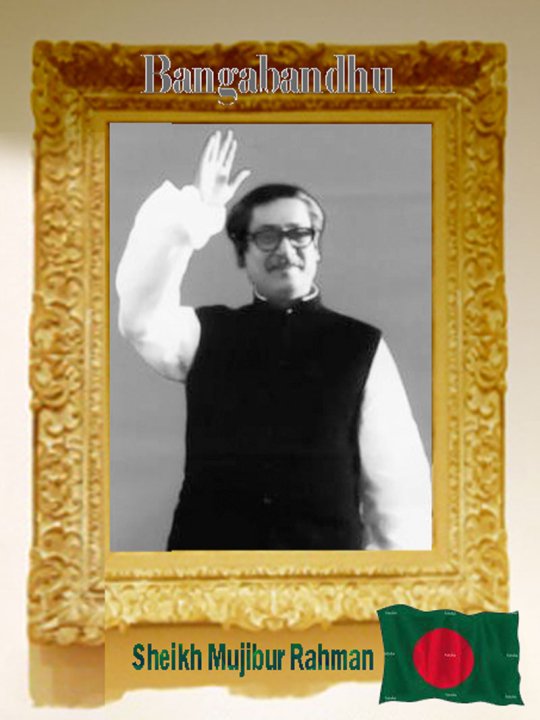
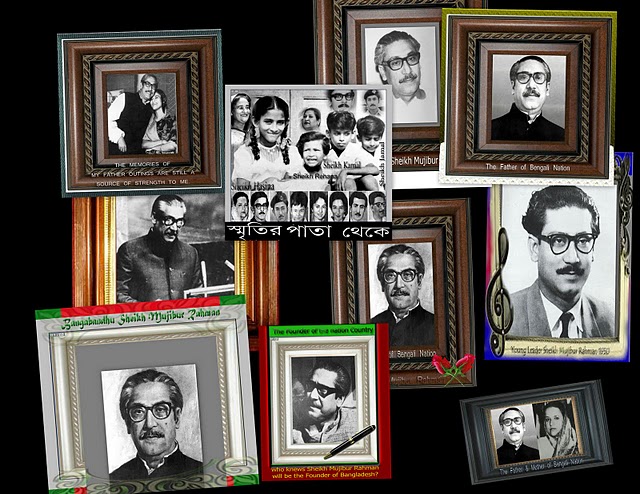
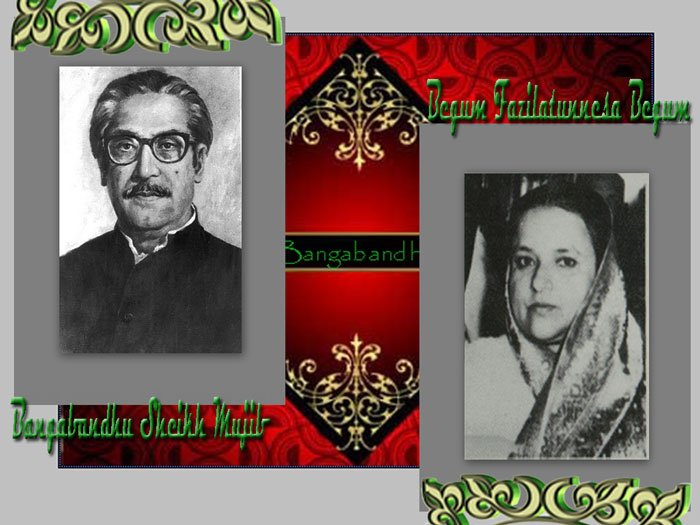
He is not a mere individual. He in an institution. A movement. A revolution. An upsurge. He is the architect of the nation. He is the essence of epic poetry and he is history.
This history goes back a thousand years. Which is why contemporary history has recognized him as the greatest Bengali of the past thousand years. The future will call him the superman of eternal time.
And he will live, in luminosity reminiscent of a bright star, in historical legends. He will show the path to the Bengali nation his dreams are the basis of the existence of the nation. A remembrance of him is the culture and society that Bengalis have sketched for themselves. His possibilities, the promises thrown forth by him, are the fountain-spring of the civilized existence of the Bengalis.
He is a friend to the masses. To the nation he is the Father. In the view of men and women in other places and other climes, he is the founder of sovereign Bangladesh. Journalist Cyril Dunn once said of him, “In the thousand – year history of Bangladesh, Sheikh Mujib is the only leader who has, in terms of blood, race, language, culture and birth, been a full – blooded Bengali. His physical stature was immense. His voice was redolent of thunder. His charisma worked magic on people. The courage and charm that flowed from him made him a unique superman in these times.”Newsweek magazine has called him the poet of politics.
The leader of the British humanist movement, the late Lord Fenner Brockway once remarked, “In a sense, Sheikh Mujib is a great leader than George Washington, Mahatma Gandhi and De Valera.” The greatest journalist of the new Egypt, Hasnein Heikal (former editor of Al Ahram and close associate of the late President Nasser) has said, “Nasser is not simply of Egypt. Arab world. His Arab nationalism is the message of freedom for the Arab people. In similar fashion, Sheikh Mujibur Rahman does not belong to Bangladesh alone. He is the harbinger of freedom for all Bangalis. His Bengali nationalism is the new emergence of Bengali civilization and culture. Mujib is the hero of the Bengalis, inn the past and in the times that are.
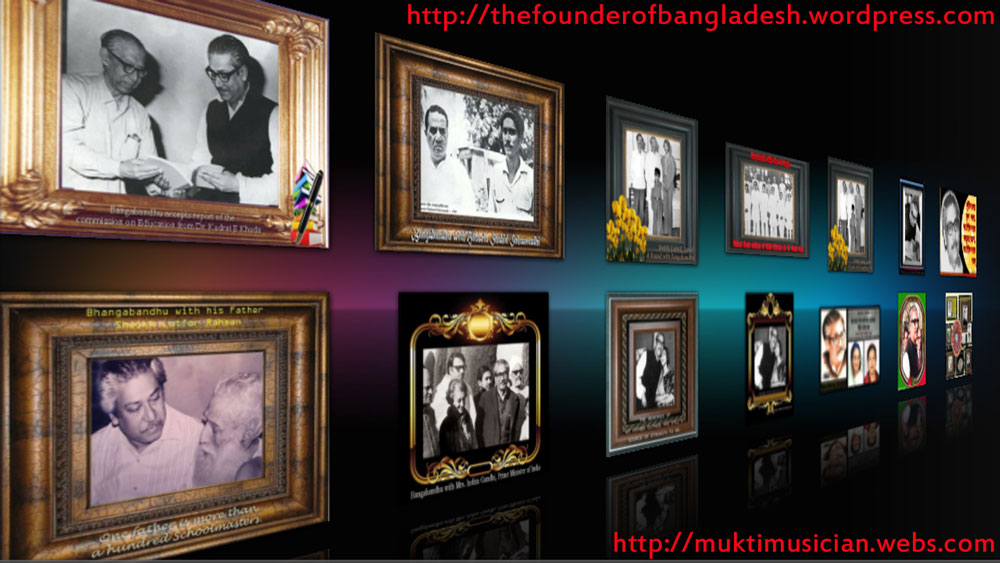
Embracing Bangabandhu at the Algiers Non – Aligned Summit in 1973, Cuba’s Fidel Castro noted, “I have not seen the Himalayas. But I have seen Sheikh Mujib. In personality and in courage, this man is the Himalayas. I have thus had the experience of witnessing the Himalayas.
Upon hearing the news of Bangabandhu’s assassination, former British Prime Minister Harold Wilson wrote to a Bengali Journalist, “This is surely a supreme national tragedy for you. For me it is a personal tragedy of immense dimensions.” Refers to the founder of a nation-state. In Europe, the outcome of democratic national aspirations has been the rise of modern nationalism and the national state. Those who have provided leadership in the task of the creation of nations or nation-states have fondly been called by their peoples as founding fathers and have been placed on the high perches of history. Such is the reason why Kamal Ataturk is the creator of modern Turkey. And thus it is that Bangabandhu Sheikh Mujibur Rahman is the founder of the Bengali nation – state and father of the nation of his fellow Bengalis. But in more ways than one, Sheikh Mujib has been a more successful founding father than either Ataturk or Gandhi. Turkey existed even during the period of the Ottoman Empire. Once the empire fell, Ataturk took control of Turkey and had it veer away from western exploitation through giving shape to a democratic nation – state. In Gandhi’s case, India and Indians did not lose their national status either before or after him. But once the British left the subcontinent, the existence of the Bengali nation appeared to have been blotted out. The new rulers of the new state of Pakistan called Bangladesh by the term “East Pakistan” in their constitution. By pushing a thousand – year
history into the shadows, the Pakistani rulers imposed the nomenclature of “Pakistanis” on the Bengalis, so much so that using the term “Bengali” or “Bangladesh” amounted to sedition in the eyes of the Pakistani state. The first man to rise in defense of the Bengali, his history and his heritage, was Sheikh Mujibur Rahman. On 25 August 1955, he said in the Pakistan Constituent Assembly, “Mr. Speaker, they ( government) want to change the name of East Bengal into East Pakistan. We have always demanded that the name ‘Bangla’ be used. There is a history behind the term Bangla. There is a tradition, a heritage, If this name is at all to be changed, the question should be placed before the people of Bengal: are they ready to have their identity changed?”
Sheikh Mujib’s demand was ignored. Bangladesh began to be called East Pakistan by the rulers. Years later, after his
release from the so – called Agartalas case, Sheikh Mujib took the first step toward doing away with the misdeed imposed on his people. On 5 December 1969, he said, “At one time, attempts were made to wipe out all traces of Bengali history and aspirations. Except for the Bay of Bengal, the term Bengal is not seen anywhere. On behalf of the people of Bengal, I am announcing today that henceforth the eastern province of Pakistan will, instead of being called East Pakistan, be known as Bangladesh.” Sheikh Mujib’s revolution was not merely directed at the achievement of political freedom. Once the Bengali nation – state was established, it become his goal to carry through programmes geared to the achievement of national economic welfare. The end of exploitation was one underlying principle of his programme, which he called the Second Revolution. While there are many who admit today that Gandhi was the founder of the non – violent non – cooperation movement, they believe it was an effective use of that principle which enabled Sheikh Sheikh Mujib to create history. Mujib’s politics was a natural follow – up to the struggle and movements of Bengal’s mystics, its religious preachers, Titumir’s crusade, the Indigo Revolt, Gandhiji’s non – cooperation, and Subhash Chandra Bose’s armed attempt for freedom. The secularism of Deshbandhu Chittaranjan Das, the liberal democratic politics of Sher-e-Bangla A. K. Fazlul Hague and Huseyn Shaheed Suhrawardy Contributed to the molding of the Mujib character. He was committed to public welfare. Emerging free of the limitations of western democracy, 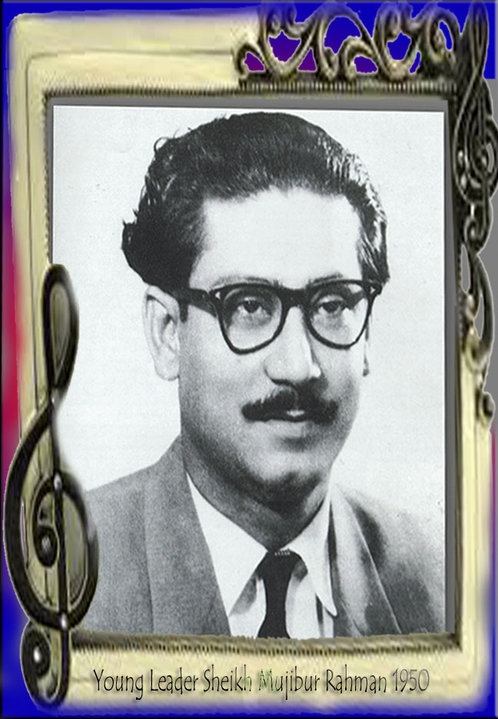 he wished to see democracy sustain Bengali nationalism. It was this dream that led to the rise of his ideology. At the United Nations, he was the first man to speak of his dreams, his people’s aspiration, in Bangla. The language was, in that swift stroke of politics, recognized by the global community. For the first time after Rabindranath Tagore’s Nobel
ABDUL GAFFAR CHOUDHURY
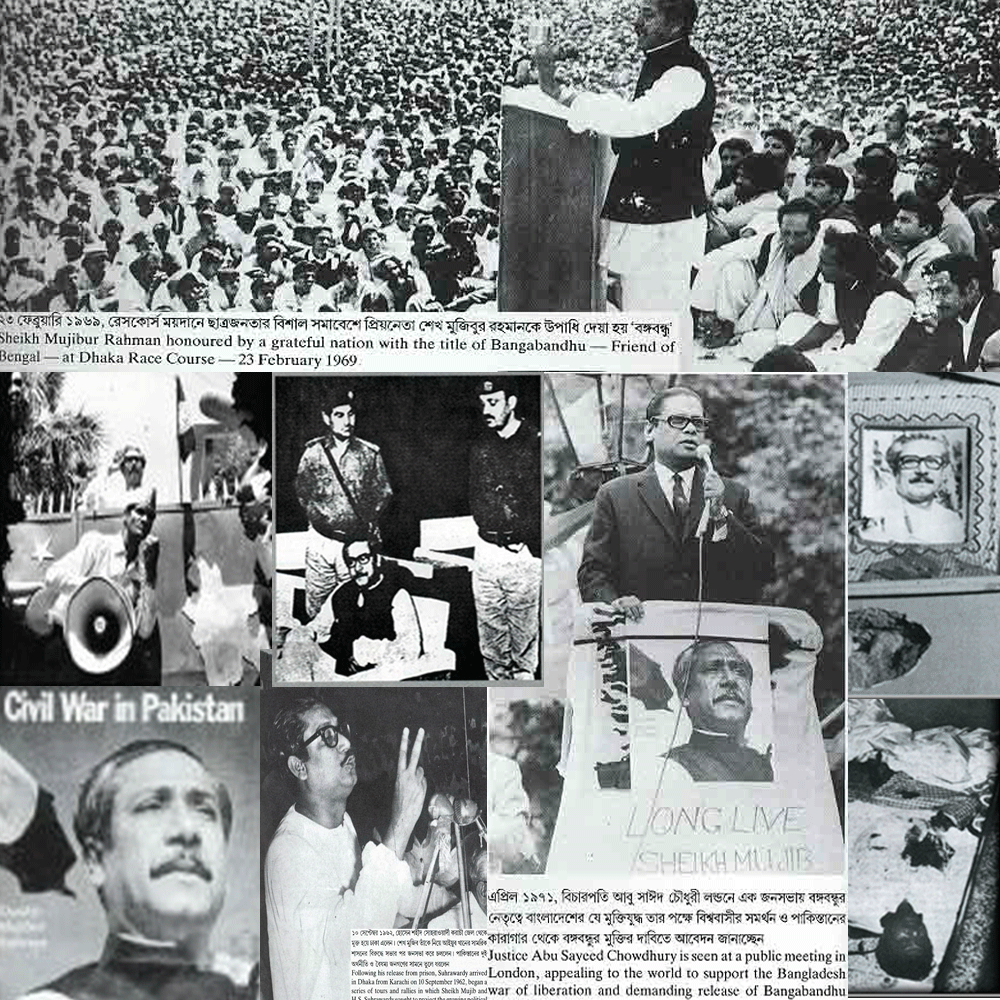
Bangabandhu Sheikh Mujibur Rahman and his family members apart, a number of people were murdered in three separate incidents on August 15, 1975, but no effective move has yet been made to bring the guilty to justice.
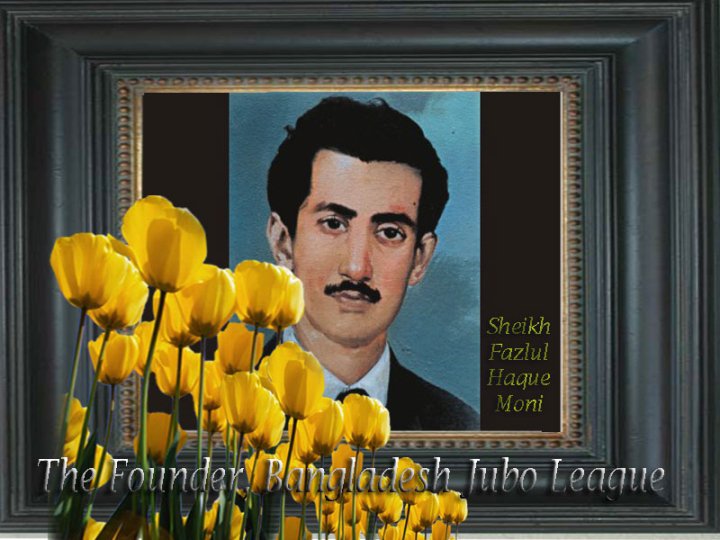
Disgruntled army personnel killed Sheikh Mujib’s nephew Sheikh Fazlul Haque Moni, founding chairman of Awami Jubo League, and wife Arzu Moni at their Dhanmondi home. Mujib’s brother-in-law Abdur Rab Serniabat, former water resources minister, was murdered at his Minto Road house.
A mortar attack by a group of army men killed 14 other people in Mohammadpur, taking the death count to 34 on that fateful day.
Three murder cases, separate from the killing of Bangabandhu, were filed in 1996, but they are still on the back burner.
Law Minister Shafique Ahmed said he was unaware of the present status of the three cases. Those were the home
ministry’s concern, he added.
Despite several attempts, Home Minister Sahara Khatun or State Minister for Home Shamsul Haque Tuku could not be reached yesterday for comment on the issue.
Attorney General Mahbubey Alam said he would take steps to get the cases disposed of.
Alam said he would soon ask the government to provide him with necessary documents to revive the cases.
All cases involving the August 15 killings should be disposed of — to bring the perpetrators to book, said the attorney general.
In January, five condemned killers of the father of the nation were executed after a Supreme Court verdict in the Bangabandhu murder case filed in October 1996.
SHEIKH MONI KILLING
A band of 25 to 30 army men surrounded Sheikh Moni’s house-170 on Road 13/1 in Dhanmondi at around 1:30am on August 15, 1975.
Carrying Sten gun and Chinese rifle, eight to ten of them in black uniform went up to the first floor and got down after firing shots.
Moni’s close aide Mohammad Shahabuddin, who was on the ground floor, went upstairs and saw Moni and his wife Arzu lying on the floor in a critical condition.
Moni’s parents, younger sister Sheikh Rekha and brother Sheikh Fazlul Karim Selim were sobbing.
Sheikh Maruf, younger brother of Moni, turned up there. Arzu cried to Selim for help and asked him to save them and their two sons — Sheikh Fazle Shams Porosh and Sheikh Fazle Noor Taposh.
Shahabuddin, Selim and Maruf took Sheikh Moni and Arzu to Dhaka Medical College and Hospital where the doctors declared them dead, read the statement of the murder case filed by Shahabuddin with Dhanmondi Police Station on November 20, 1996.
Sixteen people including former deputy minister Taheruddin Thakur were made accused in the case.
Criminal Investigation Department (CID) gave the final report in the case on August 22, 2002 and had it dismissed in secrecy, ignoring the legal bindings.
The Dhaka Chief Metropolitan Magistrate’s Court on December 30, 2002 accepted the final report and acquitted all accused without notifying the complainant.
Neither the investigation officer nor the court concerned informed the complainant about the fate of the probe.
SERNIABAT MURDER 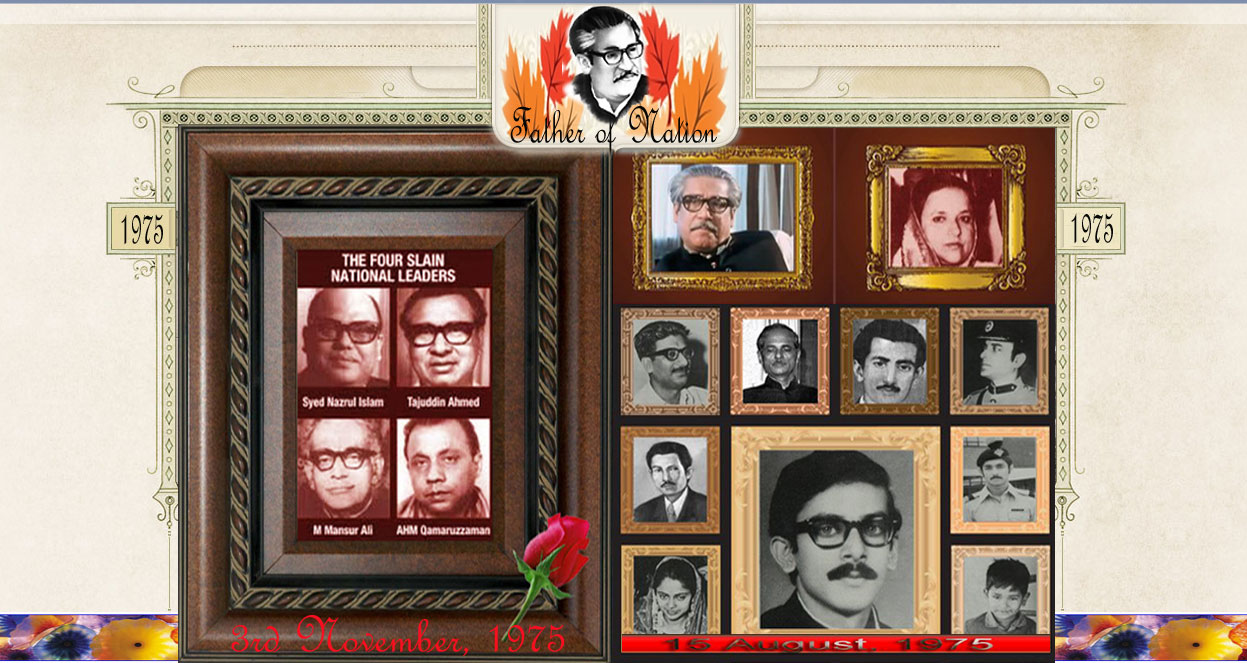
A group of army personnel led by Maj Shahriar Rashid, Maj Aziz Pasha, Capt Majed and Capt Nurul Huda stormed Serniabat’s residence on 27 Minto Road at about 5:00am.
They went up to the first floor and broke the door. Confused, Serniabat made a phone call to the residence of Bangabandhu.
The army officials rounded up the residents at the drawing room on the ground floor. Shahriar and Majed fired shots at them.
Frightened Beauty Serniabat caught hold of her father Abdur Rab Serniabat. Shahriar Rashid, Aziz Pasha and Nurul Huda fired shots again and left the scene.
Abdur Rab Serniabat, his nephew Shaheed Serniabat, daughter Baby Serniabat, son Arif Serniabat, grandson Babu Serniabat, who was four, domestic helps Potka and Laxmir Ma, and Abdur Naim Khan alias Rintu died on the spot.
Abul Hasnat Abdullah, son of Abdur Rab Serniabat, survived hiding behind a door.
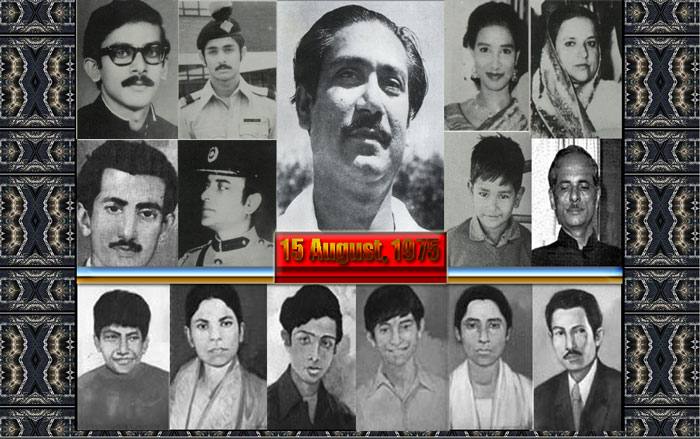
Shahan Ara Begum, wife of Hasnat, her mother-in-law Amena Begum, brother-in-law Abul Khair Serniabat, sisters-in-law Beauty and Rina Serniabat, and domestic helps Rana, Rafiqul Islam, Lalit Das and Golam Mahmud were seriously injured, said the statement of a case filed by Shahan with Ramna Police Station on October 21, 1996.
Eighteen people were charged with murder in the case.
But the proceedings of the case were stayed by the High Court in November 1999 following a criminal revision filed by Bazlul Huda, one of the accused, against the order of charge framing.
The stay order remains in force till date.
MOHAMMADPUR MORTAR ATTACK
Mohammad Ali, a resident on Sher Shah Suri Road 8 area at Mohammadpur, woke up with wounds in his left thigh at about 5:30am. He heard sound of mortar fire.
Hearing cries, he went to a nearby house on Road-9 and found Rezia Begum, wife of the house owner, Musa, and their daughter Nasima dead.
- mujib-manei shadhinatha mujib manei mukthi
He then went to House-196 and 197 on Shahjahan Road in the area where he saw bodies of Habibur Rahman, Anwara Begum, another lady by the same name, Moyful Bibi, Sabera Begum, Abdullah, Rafiqul, Safia Khatun, Shahabuddin, Kasheda, Aminuddin and Honufa Bibi, all killed in mortar fire.
Later he came to know that 14 people had been killed in Mohammadpur by mortar shells fired by a group of military personnel.
He also learned that Bangabandhu and most of his family members were dead, Ali said in the statement of a case he filed with Mohammadpur Police Station on November 29, 1996 accusing Syed Farooq Rahman and 10 others.
The case remains pending with the Fourth Additional Metropolitan Sessions Judge’s Court in Dhaka.
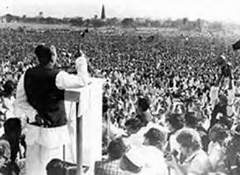
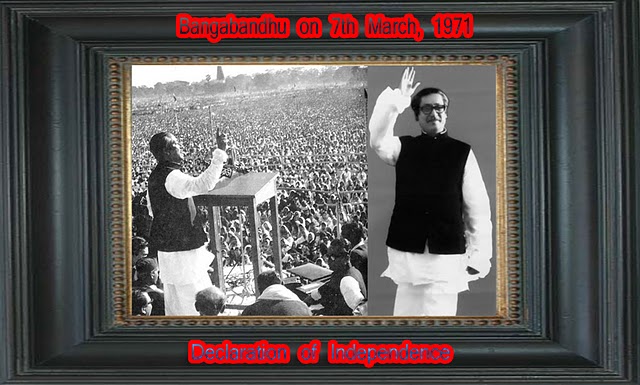
Speech of Bongobondhu Sheikh Mujibur Rahman
on the 7 March, 1971
The struggle this time is for independence!
My dear brothers…..
I have come before your today with a heavy heart.

All of your know how hard we have tried. But it is a matter of sadness that the streets of Dhaka, Chittagong, Khulna, Rangpur and Rajshahi are today being spattered with the blood of my brothers, and the cry we hear from the Bengali people is a cry for freedom a cry for survival, a cry for our rights.
You are the ones who brought about an Awami League victory so you could see a constitutional government restored. The hope was that the elected representatives of the people, sitting in the National Assembly, would formulate a constitution that would assure that people of their economic, political and cultural emancipation.
But now, with great sadness in my heart, I look back on the past 23 years of our history and see nothing but a history of the shedding of the blood of the Bengali people. Ours has been a history of continual lamentation, repeated bloodshed and innocent tears.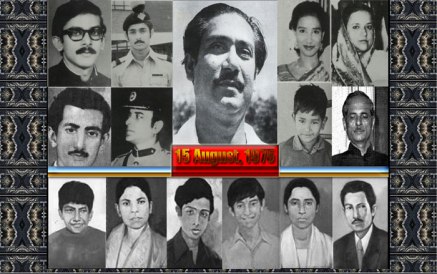
We gave blood in 1952, we won a mandate in 1954. But we were still not allowed to take up the reins of this country. In 1958, Ayub Khan clamped Martial Law on our people and enslaved us for the next 10 years. In 1966, during the Six-Point Movement of the masses, many were the young men and women whose lives were stilled by government bullets.
After the downfall of Ayub, Mr. Yahya Khan took over with the promise that he would restore constitutional rule, that he would restore democracy and return power to the people.
We agreed. But you all know of the events that took place after that
I ask you, are we the ones to blame?
As you know, I have been in contract with President Yahya Khan. As leader of the majority part in the national Assembly, I asked him to set February 15 as the day for its opening session. He did not accede to the request I made as leader of the majority party. Instead, he went along with the delay requested by the minority leader Mr. Bhutto and announced that the Assembly would be convened on the 3rd of March.
We accepted that, agreed to join the deliberations. I even went to the extent of saying that we, despite our majority, would still listen to any sound ideas from the minority, even if it were a lone voice. I committed myself to the support of anything to bolster the restoration of a constitutional government.
When Mr. Bhutto came to Dhaka, we met. We talked. He left, sing that the doors to negotiation were still open. Moulana Noorani and Moulana Mufti were among those West Pakistan parliamentarians who visited Dhaka and talked with me about an agreement on a constitutional framework.

I made it clear that could not agree to any deviation from the Six Points. That right rested with the people. Come, I said, let us sit down and resolve matters.
But Bhutto’s retort was that he would not allow himself to become hostage on two fronts. He predicted that if any West Pakistani members of Parliament were to come to Dhaka, the Assembly would be turned into a slaughterhouse. He added that if anyone were to participate in such a session, a countrywide agitation would be launched from Peshawar to Karachi and that ever business would be shut down in protest.
I assured him that the Assembly would be convened and despite the dire threats, West Pakistani leaders did come down to Dhaka.
But suddenly, on March I, the session was cancelled.
There was an immediate outcry against this move by the people. I called for a hartal as a peaceful form of protest and the masses redial took to the streets in response.
And what did we get as a response?
He turned his guns on my helpless people, a people with no arms to defend themselves. These were the same arms that had been purchased with our own money to protect us from external enemies. But it is my own people who are being fired upon today.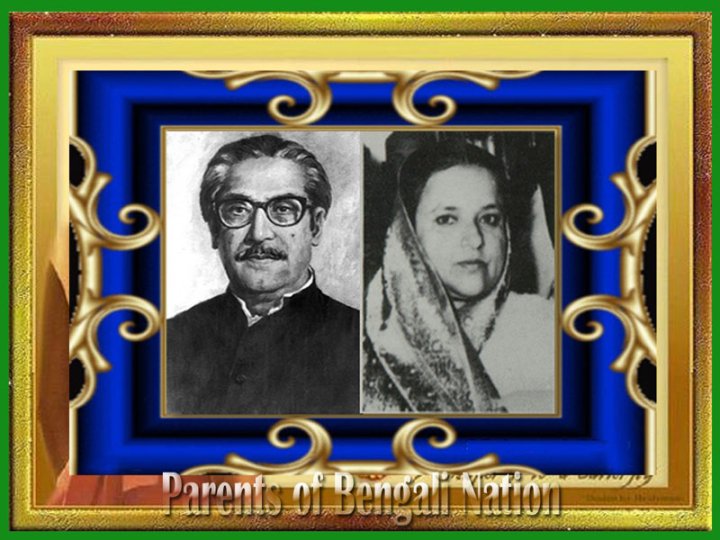
In the past, too, each time we the numerically larger segment of Pakistan’s population-tried to assert our rights and control our destiny, the conspired against us and pounced upon us.
I have asked them this before : How can you make your own brothers the target of your bullets?
Now Yahya Khan says that I had agreed to a Round Table Conference on the 10th. Let me point out that is not true.
I had said, Mr. Yahya Khan, your are the President of this country. Come to Dhaka, come and see how our poor Bengali people have been mown down by your bullets, how the laps of our mothers and sisters have been robbed and left empty and bereft, how my helpless people have been slaughtered. Come, I said, come and see for yourself and then be the judge and decide. That is what I told him.
Earlier, I had told him there would be no Round Table Conference. What Round Table Conference, whose Round Table Conference? You expect me to sit at a Round Table Conference with the very same people who have emptied the laps of my mothers and my sisters?
On the 3rd, at the Paltan, I called for a non-cooperation movement and the shutdown of offices, courts and revenue collection. You gave me full support.
Then suddenly, without consulting me or even informing us, he met with one individual for five hours and then made a speech in which he trend all the blame on me, laid all the fault at the door of the Bengali people!
The deadlock was created by Bhutto, yet the Bengalis are the ones facing the bullets! We face their guns, yet its our fault. We are the ones being bit by their bullets- and its still our fault!
So, the struggle this time is a struggle for emancipation, the struggle this time is a struggle for independence!
Brothers, they have now called the Assembly to assassin on March 25, with the streets not yet dry of the blood of my brothers. You have called the Assembly, but you must first agree to meet my demands. Martial Law must be withdrawn; the soldiers must return to their barracks; the murderers of my people must be redressed. And …. Power must be handed over to the elected representatives of the people.
Only then will we consider if we can take part in the National Assembly or not!
Before these demands are met, there can be no question of our participating in this session of the Assembly. That is one right not give to me as part of my mandate from the masses.
As I told them earlier, Mujibur Rahman refuses to walk to the Assembly trading upon the fresh stains of his brothers’ blood!
Do you, my brothers, have complete faith in me….?
…. Let me the tell you that the Prime Ministership is not what I seek. What I want is justice, the rights of the people of this land. They tempted me with the Prime Ministership but the failed to buy me over. Nor did the succeed in hanging me on the gallows, for your rescued me with your blood from the so-called conspiracy case.
That day, right here at this racecourse, I had pledge to you that I would pay for this blood debt with my own blood. Do you remember? I am read today to fulfill that promise!
I now declare the closure of all the courts, offices, and educational institutions for an indefinite period of time. No one will report to their offices- that is my instruction to you.
So that the poor are not inconvenienced, rickshaws, trains and other transport will ply normally-except serving any needs of the armed forces. If the army does not respect this, I shall not be responsible for the consequences.
The Secretariat, Supreme Court, High Court, Judge’s Courts, and government and semi-government offices shall remain shut. Only banks ma open for two hours daily for business transactions. But no money shall be transmitted from East to West Pakistan. The Bengali people must stay calm during these times. Telegraph and telephone communications will be confined within Bangladesh.
The people of this land are facing elimination, so be on guard. If need be, we will bring everything to a total standstill…….
Collect your salaries on time. If the salaries are held up, if a single bullet is fired upon us henceforth, if the murder of my people does not cease, I call upon you to turn ever home into a fortress against their onslaught. Use whatever you can put your hands on to confront this enemy. Ever last road must be blocked.
We will deprive them of food, we will deprive them of water. Even if I am not around to give you the orders, and if my associates are also not to be found, I ask you to continue your movement unabated.
I say to them again, you are my brothers, return now to the barracks where you belong and no one will bear any hostility toward you. Only do not attempt to aim any more bullets at our hearts: It will not do any good!
….. And the seven million people of this land will not be cowed down by you or accept suppression any more. The Bengali people have learned how to die for a cause and you will not be able to bring them under your yoke of suppression!
To assist the families of the martyred and the injured, the Awami League has set up committees that will do all they can. Please donate whatever you can. Also, employers must give full pay to the workers who participated in the seven days of hartal or were not able to work because of curfews.
To all government employees, I say that my directives must be followed. I had better not see any of you attending your offices. From today, until this land has been freed, no taxes will be paid to the government any more. As of now, the stop. Leave everything to me. I know how to organize movement.
But be very careful. Keep in mind that the enemy has infiltrated our ranks to engage in the work of provocateurs. Whether Bengali or non-Bengali, Hindu or Muslim, all is our brothers and it is our responsibility to ensure their safety.
I also ask you to stop listening to radio, television and the press if these media do not report news of our movement.
To them, I say, “You are our brothers. I beseech your to not turn this country into a living hell. With you not have to show your faces and confront your conscience some day?
If we can peaceably settle our differences there is still hope that we can co-exist as brothers. Otherwise there is no hope. If you choose the other path, we may never come face one another again.
For now, I have just one thing to ask of you: Give up any thoughts of enslaving this country under military rule again!”
I ask my people to immediately set up committees under the leadership of the Awami League to carry on our struggle in ever neighborhood, village, union and subdivision of this land.
You must prepare yourselves now with what little you have for the struggle ahead.
Since we have given blood, we will give more of it. But, Insha’Allah, we will free the people of this land!
The struggle this time is for emancipation! The struggle this time is for independence!
Be ready. We cannot afford to lose our momentum. Keep the movement and the struggle alive because if we fall back the will come down hard upon us.
Be disciplined. No nation’s movement can be victorious without discipline.
Joy Bangla!
Source :
POET OF POLITICS, FATHER OF THE NATION BANGABANDHU SHEIKH MUJIBUR RAHMAN Published by Father of the Nation Bangabandhu sheikh Mujibur Rahman Memorial Trust, Bangabandhu Bhaban, Road-32, Dhanmondi R/A, Dhaka-1205, Bangladesh. http://jathirpitha.wordpress.com
Joy Bangla Joy Bangabandhu, Joy hok Banglar Mehnati Manusher
- 15 august The darkest black night of the bengali nation
 একাত্তুরের মুক্তিসেনা